
June 8, 2026
Uncategorized
Best Diet Tips for a Healthy Heart in 2026

Healthy Heart Diet Tips can make a significant difference in protecting your cardiovascular health and reducing the risk of heart disease. The food choices you make every day directly impact your cholesterol levels, blood pressure, blood sugar, and overall heart function. In 2026, with increasing rates of obesity, diabetes, and cardiovascular disease, adopting a heart-healthy diet has never been more important.
Heart disease remains one of the leading causes of death worldwide. However, many heart-related conditions can be prevented through proper nutrition, regular physical activity, and healthy lifestyle habits. A balanced diet provides the nutrients your heart needs while helping to control weight and reduce inflammation.
Why Diet Matters for Heart Health
The heart works continuously to pump blood throughout the body. To function efficiently, it requires essential nutrients such as healthy fats, fiber, vitamins, minerals, and antioxidants.
A poor diet high in saturated fats, trans fats, sodium, and added sugars can lead to:
- High cholesterol
- High blood pressure
- Obesity
- Diabetes
- Blocked arteries
- Increased risk of heart attack and stroke
On the other hand, a heart-friendly diet helps maintain healthy blood vessels and supports long-term cardiovascular health.
Learn more about heart-healthy eating from the American Heart Association:
American Heart Association Nutrition Center
1. Eat More Fruits and Vegetables
Fruits and vegetables are packed with vitamins, minerals, fiber, and antioxidants that protect the heart from damage.
Best Choices:
- Berries
- Apples
- Oranges
- Spinach
- Kale
- Broccoli
- Carrots
- Tomatoes
Aim for at least five servings of fruits and vegetables daily.
Benefits:
- Lowers blood pressure
- Reduces inflammation
- Supports healthy cholesterol levels
- Improves blood vessel function
2. Choose Whole Grains Over Refined Grains
Whole grains contain more fiber and nutrients than refined grains.
Healthy Options:
- Oats
- Brown rice
- Whole wheat bread
- Quinoa
- Millet
- Barley
Fiber helps reduce LDL (bad) cholesterol and improves digestive health.
According to the Harvard T.H. Chan School of Public Health, whole grains are associated with a lower risk of cardiovascular disease.
Harvard Nutrition Source – Whole Grains
3. Include Heart-Healthy Fats
Not all fats are harmful. Healthy fats can actually improve heart health.
Good Sources:
- Avocados
- Olive oil
- Almonds
- Walnuts
- Chia seeds
- Flaxseeds
Benefits:
- Reduce LDL cholesterol
- Increase HDL (good) cholesterol
- Lower inflammation
Avoid trans fats and limit saturated fats from processed foods.
4. Eat Fatty Fish Twice a Week
Fatty fish are rich in Omega-3 fatty acids, which are known to support cardiovascular health.
Best Fish Options:
- Salmon
- Sardines
- Mackerel
- Tuna
- Trout
Benefits:
- Reduces triglycerides
- Lowers blood pressure
- Helps prevent irregular heart rhythms
Read more about Omega-3 benefits:
National Institutes of Health – Omega-3 Fact Sheet
5. Reduce Salt Intake
Excess sodium contributes to high blood pressure, a major risk factor for heart disease.
Ways to Reduce Salt:
- Cook more meals at home
- Read food labels carefully
- Avoid packaged snacks
- Use herbs and spices for flavor
The World Health Organization recommends limiting salt intake to less than 5 grams per day.
6. Limit Added Sugar
Too much sugar can lead to weight gain, diabetes, and increased cardiovascular risk.
Common Sources:
- Soft drinks
- Packaged juices
- Sweets
- Cakes
- Energy drinks
Instead, satisfy sweet cravings with fruits and naturally sweet foods.
7. Increase Fiber Intake
Fiber helps improve cholesterol levels and supports healthy digestion.
High-Fiber Foods:
- Oats
- Beans
- Lentils
- Chickpeas
- Fruits
- Vegetables
- Whole grains
Adults should aim for 25–30 grams of fiber daily.
Benefits:
- Lowers cholesterol
- Controls blood sugar
- Promotes satiety
- Supports weight management
8. Stay Hydrated
Proper hydration supports circulation and helps the heart work efficiently.
Hydration Tips:
- Drink 2–3 liters of water daily
- Limit sugary beverages
- Increase water intake during exercise
Water is often overlooked but plays a vital role in overall cardiovascular function.
9. Practice Portion Control
Even healthy foods can contribute to weight gain when eaten in excessive amounts.
Portion Control Strategies:
- Use smaller plates
- Eat slowly
- Avoid distracted eating
- Pay attention to hunger cues
Maintaining a healthy weight reduces strain on the heart.
10. Follow a Mediterranean-Style Diet
One of the most researched dietary patterns for heart health is the Mediterranean diet.
Includes:
- Fruits and vegetables
- Whole grains
- Olive oil
- Fish
- Nuts and seeds
- Legumes
Limits:
- Processed foods
- Refined sugar
- Red meat
Research consistently shows that the Mediterranean diet is associated with lower rates of heart disease and stroke.
Learn more:
Mayo Clinic – Mediterranean Diet Guide
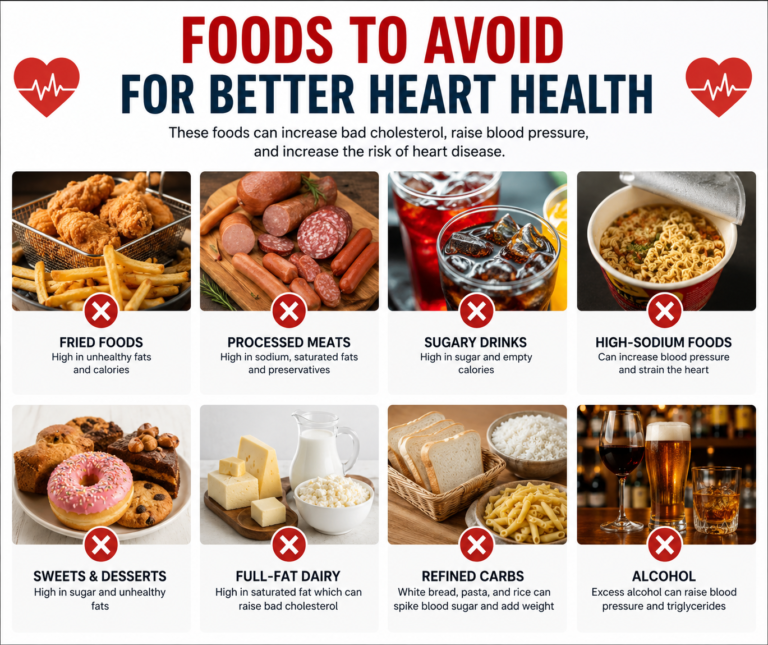
Foods to Avoid for Better Heart Health
Try to limit:
- Fried foods
- Processed meats
- Sugary beverages
- Fast food
- Packaged snacks
- High-sodium foods
- Refined carbohydrates
Reducing these foods can significantly lower your cardiovascular risk.
Sample Heart-Healthy Daily Meal Plan
Breakfast
- Oatmeal with berries and flaxseeds
- Green tea
Mid-Morning Snack
- Apple and almonds
Lunch
- Brown rice
- Grilled fish or lentils
- Mixed vegetables
Evening Snack
- Fruit bowl
- Handful of walnuts
Dinner
- Whole wheat chapati
- Vegetable curry
- Salad
Before Bed
- Warm low-fat milk
Additional Lifestyle Tips for a Healthy Heart
Diet works best when combined with healthy habits:
- Exercise at least 150 minutes per week
- Get 7–9 hours of sleep
- Avoid smoking
- Limit alcohol consumption
- Manage stress effectively
- Schedule regular health checkups
When to Consult a Cardiologist
Consider a heart health evaluation if you have:
- High blood pressure
- High cholesterol
- Diabetes
- Family history of heart disease
- Chest discomfort
- Shortness of breath
- Obesity
Early detection can prevent serious complications.
Conclusion
Healthy Heart Diet Tips are one of the most effective ways to protect your cardiovascular system and improve overall well-being. By eating more fruits, vegetables, whole grains, healthy fats, and lean proteins while limiting salt, sugar, and processed foods, you can significantly reduce your risk of heart disease.
Small dietary changes made consistently can lead to lifelong heart health benefits. Start implementing these Healthy Heart Diet Tips today and take an important step toward a stronger, healthier heart in 2026 and beyond.
About Us
Dr Vaggar Clinic offers expert care in cardiology and nephrology with advanced treatment and personalized patient support.
Our experienced team is dedicated to delivering compassionate, high-quality healthcare for heart and kidney conditions.
Quick Links
Services
Copyright © 2026 Dr Vaggar Clinic | Developed by Natton Digital
Copyright © 2022 ASK Project