
August 21, 2026
Uncategorized
Can High Blood Pressure Damage Your Kidneys? Understanding the Heart-Kidney Connection
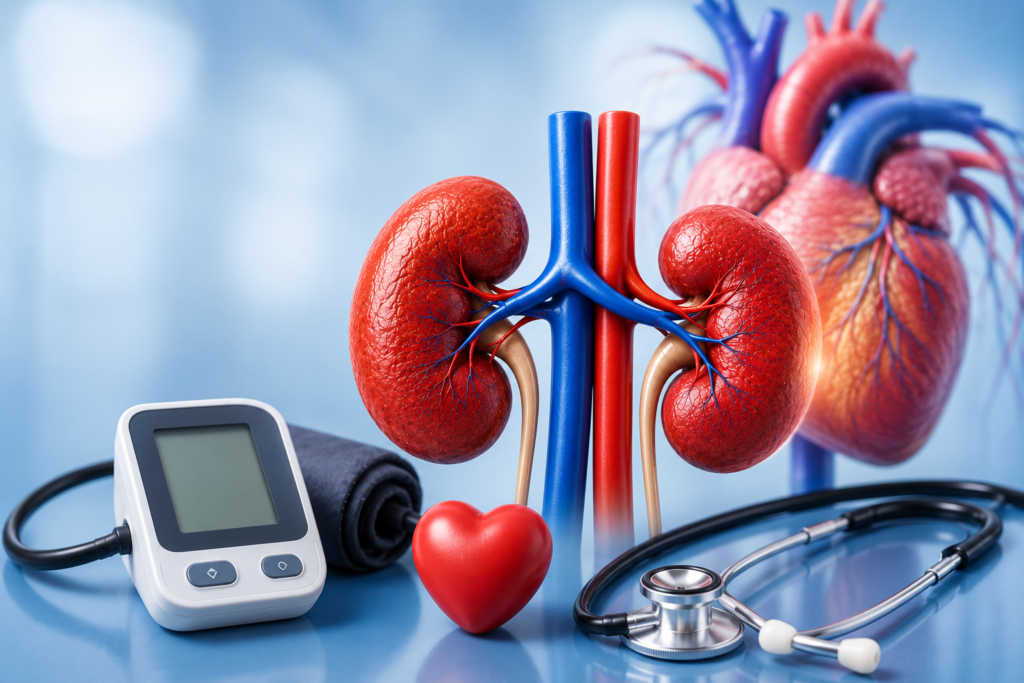
High blood pressure and kidney damage are closely connected, and uncontrolled hypertension can gradually affect the blood vessels and filtering structures inside the kidneys. Because high blood pressure often causes few or no noticeable symptoms, kidney damage can develop silently for years before a person realizes there is a problem.
The kidneys and heart work together to maintain the body’s fluid balance, blood pressure, and circulation. When blood pressure remains elevated for a long time, it can put continuous stress on the small blood vessels in the kidneys. As kidney function declines, the kidneys may become less effective at removing excess salt and fluid, which can make blood pressure even harder to control.
This creates a potentially harmful cycle:
High blood pressure → Kidney blood vessel damage → Reduced kidney function → Increased blood pressure → Further kidney damage
Understanding this relationship and taking action early can help protect both kidney and cardiovascular health.
What Is High Blood Pressure?
High blood pressure, also called hypertension, occurs when the force of blood against the walls of the arteries remains too high over time.
Blood pressure is recorded using two numbers:
- Systolic blood pressure:The pressure when the heart contracts and pumps blood.
- Diastolic blood pressure:The pressure when the heart relaxes between beats.
A single elevated reading does not necessarily mean that a person has hypertension. Blood pressure should be assessed properly and interpreted by a healthcare professional.
The 2025 American Heart Association/American College of Cardiology guideline identifies high blood pressure as a major modifiable risk factor for cardiovascular disease and chronic kidney disease.
Can High Blood Pressure Damage the Kidneys?
Yes. Long-term uncontrolled high blood pressure can damage the kidneys.
The kidneys contain millions of tiny filtering structures and a dense network of small blood vessels. These structures continuously filter blood, remove waste products, and help regulate fluid and electrolyte balance.
When blood pressure remains high, the blood vessels supplying the kidneys can become damaged, narrowed, hardened, or weakened. This can interfere with the kidneys’ ability to filter blood properly.
According to the American Heart Association, uncontrolled high blood pressure can damage kidney blood vessels and impair kidney filtration.
Over time, this may contribute to chronic kidney disease.
How Does High Blood Pressure Affect the Kidneys?
There are several ways hypertension can affect kidney function.
1. Damage to Kidney Blood Vessels
The kidneys depend on healthy blood vessels to receive blood and perform their filtering functions.
Persistent high pressure can injure these delicate vessels. When blood flow and vessel health are affected, the kidneys may gradually lose their ability to filter waste efficiently.
2. Reduced Kidney Filtration
Damaged kidneys may not remove waste products and excess fluid from the blood as effectively as healthy kidneys.
This can lead to changes in fluid balance and may contribute to further increases in blood pressure.
3. Increased Fluid Retention
When kidney function declines, the body may retain additional salt and water.
Extra fluid can increase the amount of blood circulating through the blood vessels, potentially raising blood pressure further.
4. A Dangerous Cycle Can Develop
Kidney disease and hypertension can reinforce one another.
High blood pressure can damage the kidneys, while damaged kidneys can make blood pressure more difficult to control. The American Heart Association describes this as a harmful cycle that can progressively affect both kidney function and blood pressure control.
Why Is the Heart-Kidney Connection Important?
The heart and kidneys are not independent systems. They continuously influence each other.
The heart pumps blood throughout the body, including to the kidneys. The kidneys help regulate fluid levels, electrolytes, and blood pressure.
When one organ becomes affected, the other may also be placed under additional stress.
For example:
High blood pressure → Blood vessel damage → Kidney dysfunction → Fluid retention → Higher blood pressure
Kidney disease can also increase cardiovascular risk. The National Kidney Foundation notes that kidney disease and cardiovascular disease are closely connected, with high blood pressure being an important shared risk factor.
This is why managing blood pressure is important not only for kidney health but also for long-term heart health.
What Are the Symptoms of Kidney Damage Caused by High Blood Pressure?
One of the biggest challenges is that early kidney disease may not produce obvious symptoms.
A person can have elevated blood pressure and early kidney damage without feeling unwell.
As kidney function becomes more affected, symptoms may include:
- Swelling around the ankles, feet, legs, or face
- Changes in urination
- Foamy or unusually bubbly urine
- Increased tiredness
- Weakness
- Difficulty concentrating
- Nausea or loss of appetite
- Shortness of breath
- Changes in sleep
- Persistent itching in advanced kidney disease
These symptoms can have many possible causes and should not automatically be attributed to kidney disease.
The National Kidney Foundation emphasizes that high blood pressure and early chronic kidney disease may not cause noticeable symptoms, which makes regular screening important.
Who Is at Higher Risk?
Some people have a greater risk of developing hypertension-related kidney problems.
Risk factors include:
Diabetes
Diabetes can affect the small blood vessels in the kidneys. When diabetes and high blood pressure occur together, kidney health requires particularly careful monitoring.
Long-Term High Blood Pressure
The longer blood pressure remains poorly controlled, the greater the potential for damage to blood vessels and organs.
Family History
A family history of kidney disease or cardiovascular disease may increase a person’s risk.
Excess Weight
Being overweight or obese can increase the risk of high blood pressure and other metabolic conditions associated with kidney disease.
High-Salt Diet
Excess dietary sodium can contribute to increased blood pressure in many people.
Smoking
Smoking damages blood vessels and increases cardiovascular risk.
Physical Inactivity
Regular physical activity can support healthy blood pressure, cardiovascular fitness, and overall health.
How Can You Tell If High Blood Pressure Is Affecting Your Kidneys?
Blood pressure measurement alone cannot determine whether kidney damage has occurred.
A doctor may recommend kidney-function testing depending on your health history and risk factors.
1. Serum Creatinine and eGFR
A blood test can measure creatinine, which can be used to estimate the kidneys’ filtering ability through the estimated glomerular filtration rate (eGFR).
eGFR helps healthcare professionals assess kidney function.
2. Urine Albumin-to-Creatinine Ratio
A urine test called the urine albumin-to-creatinine ratio (uACR) can identify albumin, a type of protein, in the urine.
Increased urinary albumin can be an early indicator of kidney damage.
The National Kidney Foundation identifies eGFR and urine albumin testing as important tests for evaluating chronic kidney disease.
3. Blood Pressure Monitoring
Regular blood pressure monitoring helps identify persistent hypertension and assess how well treatment is working.
Your doctor may recommend home monitoring or repeated clinic measurements depending on your circumstances.
4. Kidney Imaging
In some situations, a healthcare professional may recommend imaging such as an ultrasound or other appropriate tests to evaluate the kidneys.
Can Kidney Damage From High Blood Pressure Be Prevented?
In many cases, the risk of kidney damage can be reduced by identifying and managing high blood pressure early.
Important steps include:
Monitor Your Blood Pressure
Regular monitoring can help identify elevated blood pressure before complications develop.
Do not rely on symptoms alone because hypertension can remain silent.
Take Prescribed Medication Correctly
If your doctor has prescribed blood pressure medication, take it according to the prescribed schedule.
Do not stop or change medication without discussing it with your healthcare professional.
Reduce Excess Salt
A diet lower in sodium can help support healthy blood pressure.
Choose fresh foods more often and limit highly processed foods that can contain significant amounts of sodium.
Maintain a Healthy Weight
If you are overweight, gradual and medically appropriate weight management may help improve blood pressure and reduce cardiovascular risk.
Stay Physically Active
Regular physical activity can support cardiovascular health and blood pressure management.
Choose activities appropriate for your age, fitness level, and medical condition.
Control Diabetes and Cholesterol
If you have diabetes or abnormal cholesterol levels, managing these conditions is also important for protecting blood vessels and reducing cardiovascular and kidney risks.
Avoid Smoking
Smoking can damage blood vessels and increase the risk of cardiovascular complications.
How Often Should You Check Your Kidney Health?
There is no single testing schedule that is appropriate for everyone.
People with conditions such as hypertension, diabetes, cardiovascular disease, or a history of kidney problems may need periodic kidney-function assessment.
Your doctor can determine which tests are appropriate based on your age, medical history, blood pressure levels, medications, and other risk factors.
Early testing can be valuable because kidney disease may progress without obvious symptoms.
When Should You See a Doctor?
Consider speaking with a healthcare professional if:
- Your blood pressure readings are repeatedly elevated.
- You have diabetes and high blood pressure.
- You have swelling in your legs, feet, or face.
- You notice persistent changes in your urine.
- You have a family history of kidney disease.
- You have been diagnosed with kidney disease.
- Your blood pressure remains difficult to control despite treatment.
- You experience unexplained fatigue or other persistent symptoms.
If you have severe symptoms such as chest pain, severe breathlessness, sudden weakness, difficulty speaking, or other signs of a medical emergency, seek urgent medical attention.
Heart and Kidney Health: Why Integrated Care Matters
Because the heart and kidneys are closely connected, managing one without considering the other may not provide the complete picture for patients who have multiple risk factors.
At Dr. Vaggar’s Heart & Kidney Care Centre in Vijayapura, cardiology and nephrology services are offered together, with the hospital describing its approach as integrated heart and kidney care.
The centre’s team includes Dr. Goutam S. Vaggar, Consultant Interventional Cardiologist, and Dr. Monica R. Nayaka, Consultant Nephrologist & Kidney Transplant Physician.
This multidisciplinary approach can be particularly valuable when cardiovascular and kidney risk factors overlap.
Frequently Asked Questions
Can high blood pressure cause kidney failure?
Long-term uncontrolled high blood pressure can contribute to progressive kidney damage and may eventually lead to advanced kidney disease or kidney failure. The risk depends on factors such as the severity and duration of hypertension, other medical conditions, and how well blood pressure is managed.
Can kidney disease cause high blood pressure?
Yes. Kidney disease can contribute to high blood pressure because the kidneys play an important role in regulating fluid balance and blood pressure. This can create a cycle in which kidney disease and hypertension worsen each other.
Can you have kidney disease without symptoms?
Yes. Early kidney disease can develop without obvious symptoms. This is one reason regular blood pressure checks and appropriate kidney testing are important for people at increased risk.
What kidney tests are commonly used?
Common tests include blood creatinine with eGFR and urine albumin-to-creatinine ratio. Depending on the situation, a doctor may recommend additional blood, urine, or imaging tests.
Is high blood pressure treatable?
High blood pressure can often be managed through lifestyle measures, regular monitoring, and medication when prescribed. The appropriate treatment plan depends on the individual and should be determined with a healthcare professional.
Conclusion
High blood pressure and kidney damage are closely linked, but taking action early can help reduce the risk of long-term complications.
Because hypertension may not produce noticeable symptoms, regularly checking your blood pressure is an important part of preventive healthcare. If you have high blood pressure, diabetes, cardiovascular disease, or other kidney-disease risk factors, ask your healthcare professional whether kidney-function testing is appropriate.
Protecting your kidneys also means protecting your heart. A healthy diet, regular physical activity, appropriate medication, blood pressure monitoring, and timely medical evaluation can all play an important role in maintaining long-term cardiovascular and kidney health.
At Dr. Vaggar’s Heart & Kidney Care Centre, patients can access specialized cardiology and nephrology care in Vijayapura, supporting a coordinated approach to heart and kidney health.
Your blood pressure numbers are more than just numbers—they can provide an important insight into your long-term heart and kidney health.
Expert Care for Heart and Kidney Health
At Dr Vaggar Hospital, Vijayapura, we provide expert care for heart and kidney conditions with advanced diagnostics and personalized treatment. If you notice warning signs, early consultation can make a major difference.
🔗 Backlinks:
About Us
Dr Vaggar Clinic offers expert care in cardiology and nephrology with advanced treatment and personalized patient support.
Our experienced team is dedicated to delivering compassionate, high-quality healthcare for heart and kidney conditions.

Quick Links
Services
Copyright © 2026 Dr Vaggar Clinic | Developed by Natton Digital
Copyright © 2022 ASK Project